

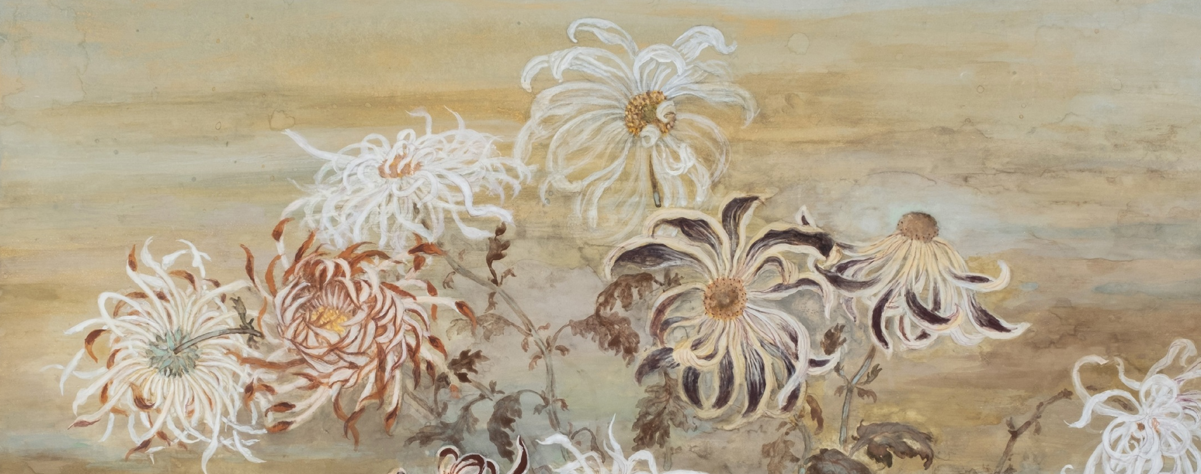
Chisako Fukuyama
The Quiver of Nonhuman Life
September 2(Wed) – September 13 (Sun), 2026
NEW is pleased to present *The Quiver of Nonhuman Life*, a solo exhibition by painter Chisako Fukuyama, on view from Wednesday, September 2 through Sunday, September 13, 2026.
Throughout her practice, Fukuyama has responded to subtle signs of small, overlooked, and abandoned forms of life, tracing, for instance, the temporal processes through which plants wilt, wither, and decay. A graduate of Musashino Art University, her practice extends beyond the field of painting, and has been profoundly influenced by Kazuo Ohno, Yukio Nakagawa, and Isamu Wakabayashi.
At her first solo exhibition in 1998, the poet Gozo Yoshimasu contributed an introductory text on the artist, while Kazuo Ohno, inspired by Fukuyama’s paintings, performed a dance in front of her works. Since then, she has continued to exhibit primarily through solo exhibitions. In recent years, her works have also been featured in exhibitions at the Ashikaga Museum of Art, where a number of her works are now held in the collection.
The Japanese title of this exhibition, *Isei no Sendō*, centers on the word *sendō* (顫動), meaning a faint, subtle trembling or quivering. Fukuyama turns her attention toward forms of nonhuman life that can never be fully subsumed within human systems of value and meaning—to the very existence of the minute quivering of such other forms of life.
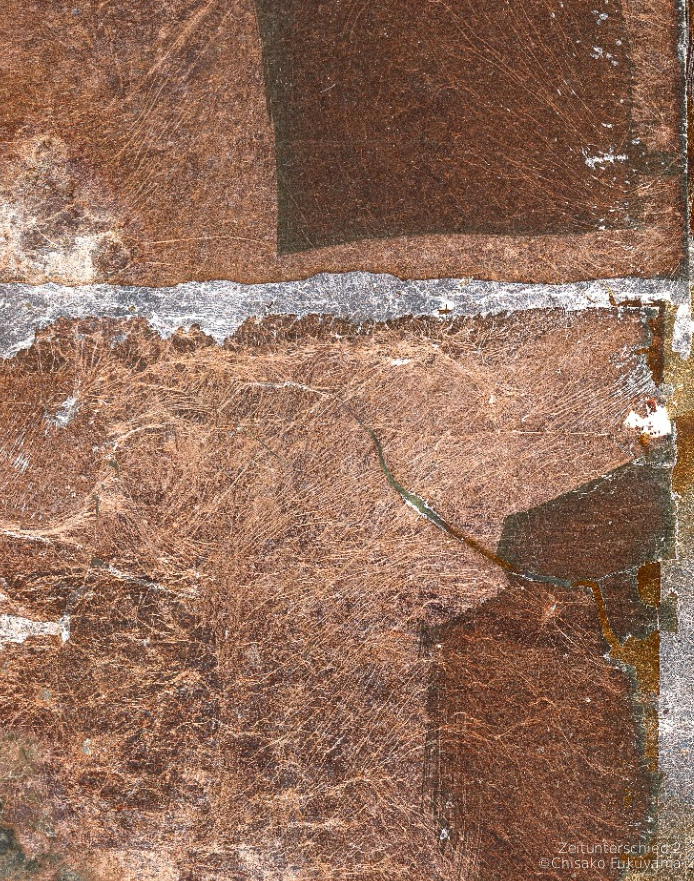
How far can painting respond to the signs of small lives that are trampled underfoot and disappear without ever being named? The accumulated layers of paint and paper emerge on the surface as the very embodiment of the time Fukuyama has devoted to this question.
We invite you to visit the exhibition and experience *The Quiver of Nonhuman Life* as rendered through the paintings of Chisako Fukuyama.
Throughout her practice, Fukuyama has responded to subtle signs of small, overlooked, and abandoned forms of life, tracing, for instance, the temporal processes through which plants wilt, wither, and decay. A graduate of Musashino Art University, her practice extends beyond the field of painting, and has been profoundly influenced by Kazuo Ohno, Yukio Nakagawa, and Isamu Wakabayashi.
At her first solo exhibition in 1998, the poet Gozo Yoshimasu contributed an introductory text on the artist, while Kazuo Ohno, inspired by Fukuyama’s paintings, performed a dance in front of her works. Since then, she has continued to exhibit primarily through solo exhibitions. In recent years, her works have also been featured in exhibitions at the Ashikaga Museum of Art, where a number of her works are now held in the collection.
The Japanese title of this exhibition, *Isei no Sendō*, centers on the word *sendō* (顫動), meaning a faint, subtle trembling or quivering. Fukuyama turns her attention toward forms of nonhuman life that can never be fully subsumed within human systems of value and meaning—to the very existence of the minute quivering of such other forms of life.
How far can painting respond to the signs of small lives that are trampled underfoot and disappear without ever being named? The accumulated layers of paint and paper emerge on the surface as the very embodiment of the time Fukuyama has devoted to this question.
We invite you to visit the exhibition and experience *The Quiver of Nonhuman Life* as rendered through the paintings of Chisako Fukuyama.
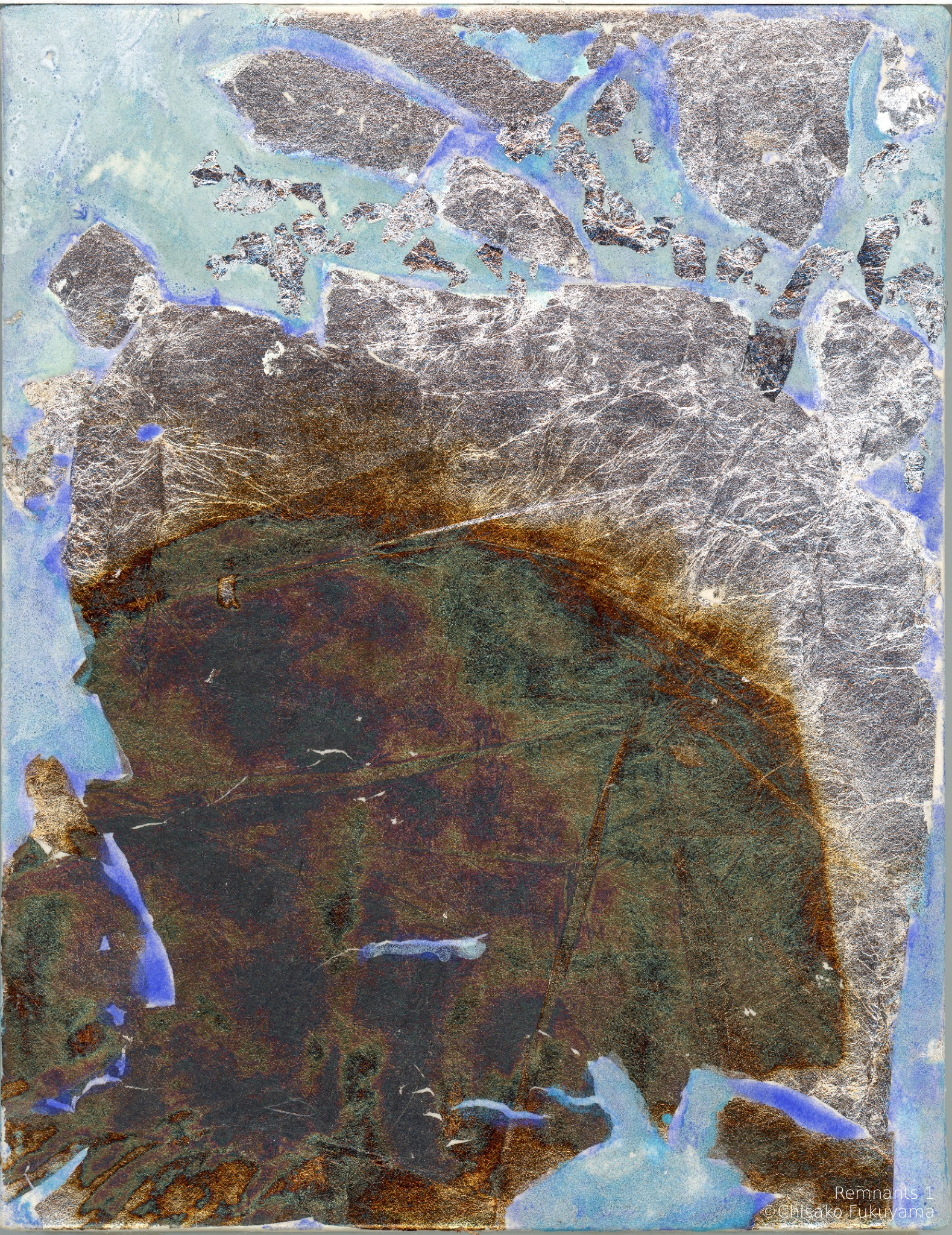
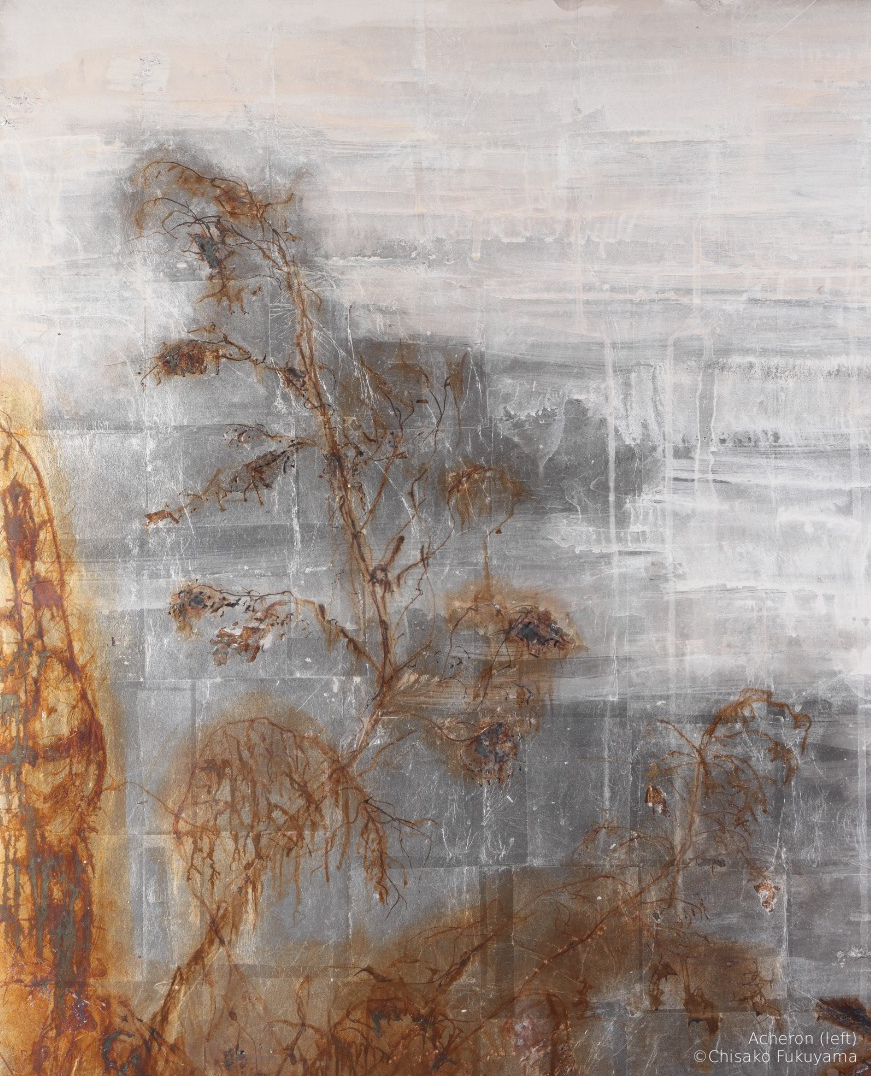
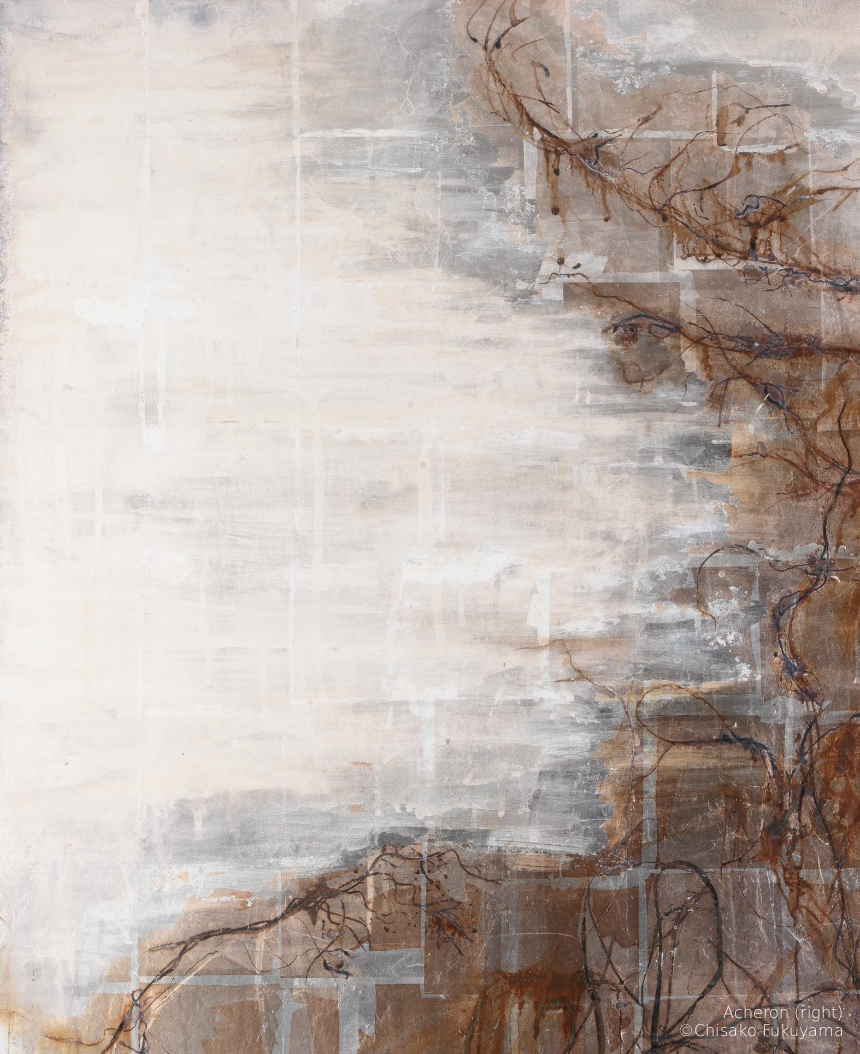
Chisako Fukuyama
Born in Nishi-Shinjuku, Shinjuku, Tokyo. Fukuyama graduated from Musashino Art University. Her artistic practice extends beyond the field of painting, and she was profoundly influenced by Kazuo Ohno, Yukio Nakagawa, and Isamu Wakabayashi.
In 1998, she held her first solo exhibition at Gallery Miyasaka in Ginza, Tokyo. The poet Gozo Yoshimasu contributed an introductory text on the artist, and Kazuo Ohno, inspired by her work, performed a dance in front of her paintings. Since then, Fukuyama has continued to present her work primarily through solo exhibitions.
Her publications include the essay collection *Han-e, Fureru, Kedamono no Furabon* (Suiseisha, 2012) and the monograph *Hana Sakeru, Haie Saka-meguri* (Suiseisha, 2021), which features a foreword by Giorgio Agamben. In 2026, Heibonsha published Iki no Kōya, Sekai ga Sendō Shiteiru: Gaka no Shokuhatsu Suru / Sareru Shintai, a collaborative work with photographer Allegories of Life(2025), Ashikaga Museum of Art. Three exhibited works were acquired for the museum’s collection.
OSAKA INTERNATIONAL ART (2025), Osaka, Japan.
*Faenza Contemporary Art Festival (2011), Italy.
Born in Nishi-Shinjuku, Shinjuku, Tokyo. Fukuyama graduated from Musashino Art University. Her artistic practice extends beyond the field of painting, and she was profoundly influenced by Kazuo Ohno, Yukio Nakagawa, and Isamu Wakabayashi.
In 1998, she held her first solo exhibition at Gallery Miyasaka in Ginza, Tokyo. The poet Gozo Yoshimasu contributed an introductory text on the artist, and Kazuo Ohno, inspired by her work, performed a dance in front of her paintings. Since then, Fukuyama has continued to present her work primarily through solo exhibitions.
Her publications include the essay collection *Han-e, Fureru, Kedamono no Furabon* (Suiseisha, 2012) and the monograph *Hana Sakeru, Haie Saka-meguri* (Suiseisha, 2021), which features a foreword by Giorgio Agamben. In 2026, Heibonsha published Iki no Kōya, Sekai ga Sendō Shiteiru: Gaka no Shokuhatsu Suru / Sareru Shintai, a collaborative work with photographer Allegories of Life(2025), Ashikaga Museum of Art. Three exhibited works were acquired for the museum’s collection.
OSAKA INTERNATIONAL ART (2025), Osaka, Japan.
*Faenza Contemporary Art Festival (2011), Italy.
● Books
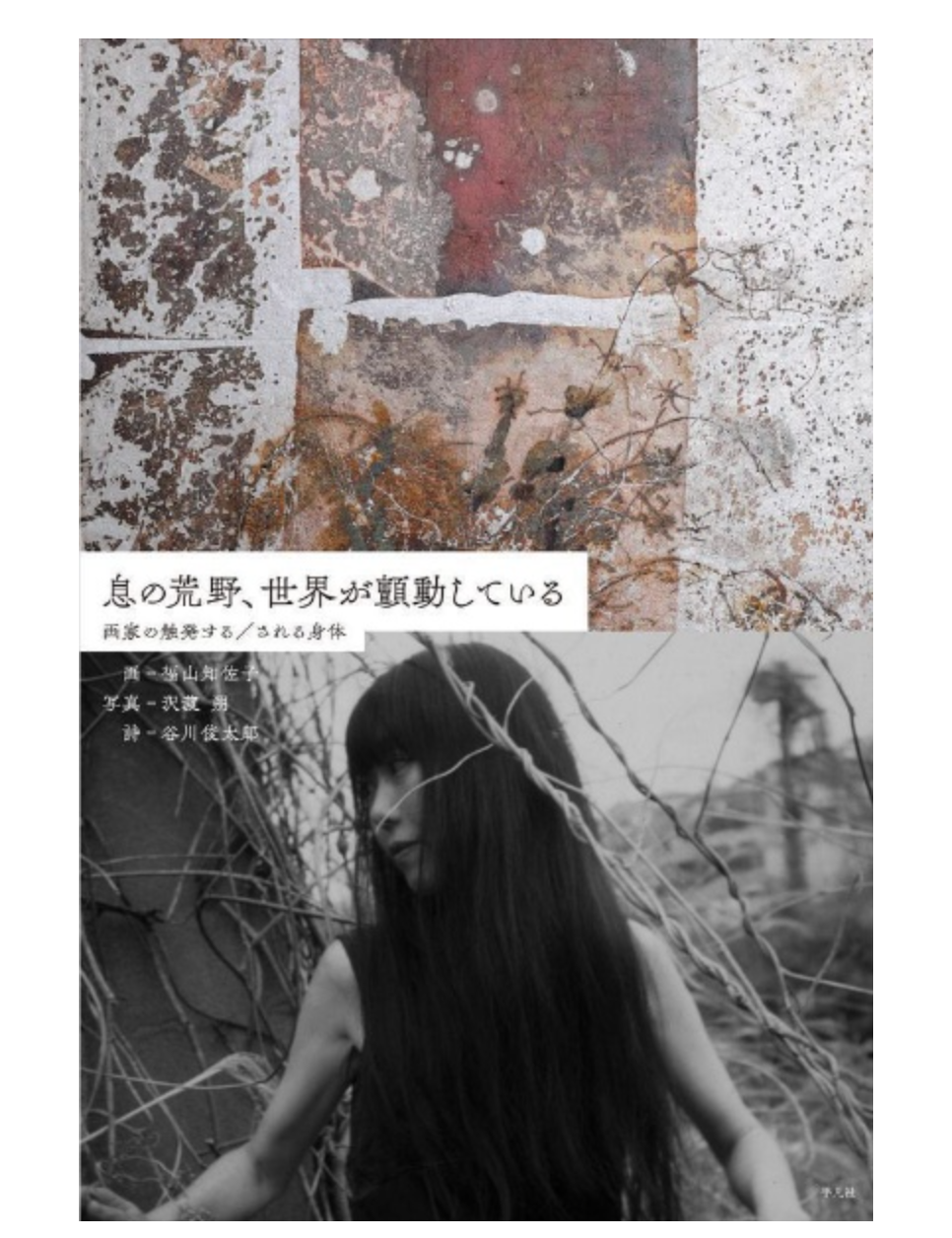
In conjunction with the exhibition, *Iki no Kōya, Sekai ga Sendō Shiteiru: Gaka no Shokuhatsu Suru / Sareru Shintai* (Heibonsha), a collaborative publication with photographer Hajime Sawatari and poet Shuntaro Tanikawa, will be available for purchase. JPY 4,950 (tax included)
Also available will be *Hana Sakeru, Haie Saka-meguri: Chisako Fukuyama Art Book* (Suiseisha), JPY 3,850 (tax included), and *Han-e, Fureru, Kedamono no Furabon* (Suiseisha), JPY 2,420 (tax included).
In conjunction with the exhibition, *Iki no Kōya, Sekai ga Sendō Shiteiru: Gaka no Shokuhatsu Suru / Sareru Shintai* (Heibonsha), a collaborative publication with photographer Hajime Sawatari and poet Shuntaro Tanikawa, will be available for purchase. JPY 4,950 (tax included)
Also available will be *Hana Sakeru, Haie Saka-meguri: Chisako Fukuyama Art Book* (Suiseisha), JPY 3,850 (tax included), and *Han-e, Fureru, Kedamono no Furabon* (Suiseisha), JPY 2,420 (tax included).
Chisako Fukuyama
The Quiver of Nonhuman Life
Dates: September 2 (Wed) – September 13 (Sun), 2026
Venue: NEW
B1F, 5-9-15 Jingumae, Shibuya-ku, Tokyo 150-0001
Hours: 12:00 – 19:00 Closed on Mondays
● Reception
September 4 (Fri), 2026
Time: 18:00 – 20:00
Venue: NEW
● Artist Talk
Artist Chisako Fukuyama and Seiji Shinohara (curator and researcher of postwar Japanese art) will discuss the exhibition and Fukuyama’s publications.
September 4 (Fri), 2026
Time: 18:00 – 18:30
Venue: NEW
Open to all. No reservation required; seating is unreserved.
The Quiver of Nonhuman Life
Dates: September 2 (Wed) – September 13 (Sun), 2026
Venue: NEW
B1F, 5-9-15 Jingumae, Shibuya-ku, Tokyo 150-0001
Hours: 12:00 – 19:00 Closed on Mondays
● Reception
September 4 (Fri), 2026
Time: 18:00 – 20:00
Venue: NEW
● Artist Talk
Artist Chisako Fukuyama and Seiji Shinohara (curator and researcher of postwar Japanese art) will discuss the exhibition and Fukuyama’s publications.
September 4 (Fri), 2026
Time: 18:00 – 18:30
Venue: NEW
Open to all. No reservation required; seating is unreserved.