- CONDITION
-
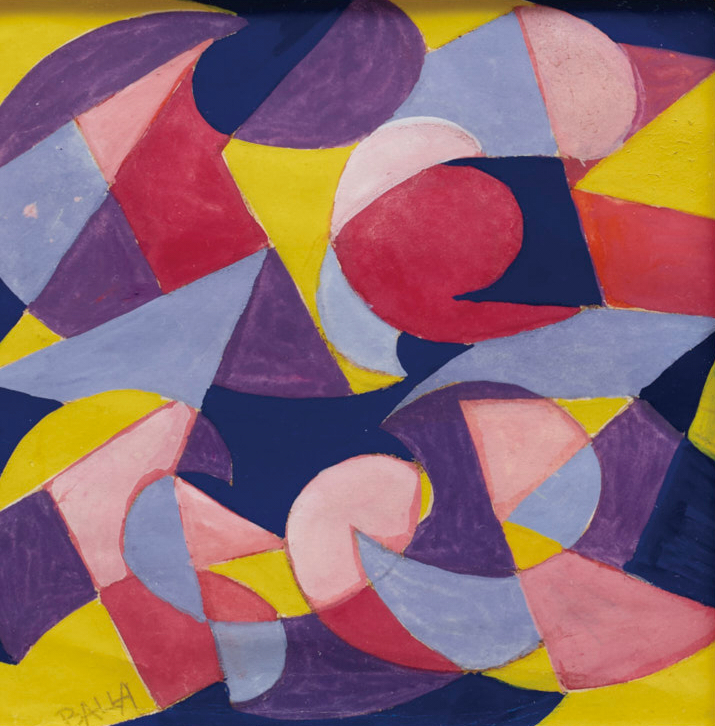
Signed lower left.
With a crease to the lower part and another to the left side, the latter apparently original to the work.
With a hole to the left edge and minor knocks to the corners.
Tape affixed to the upper and lower left of the reverse, with tape marks to the right side.
- DESCRIPTION
-
Giacomo Balla (1871–1958) was a leading artist of Italian Futurism. Bella's early works were heavily influenced by Neo-Impressionism and figurative painitng employed pointillist techniques. In 1910, he signed the Futurist Painitng: Techinical Manifesto and joined the Futurist movement. In 1915, he signed the seminal manifesto the Futurist Reconstruction of the Universe together with Fortunato Depero, an attempt to extend Futurist expression beyond the arts and into everyday life. He remained a driving force within Futurism until 1937, when he began to distance himself from the movement. In marked contrast to Futurism's glorification of machinery and violence, Balla developed a distinctive Futurist approach to color, one that grew out of and advanced his pointillist and Neo-Impressionist roots, to visually explore invisible phenomena such as sound and light. Among his most celebrated works are Dynamism of a Dog on a Leash (1912) and Abstract Speed + Sound (1913–1914).
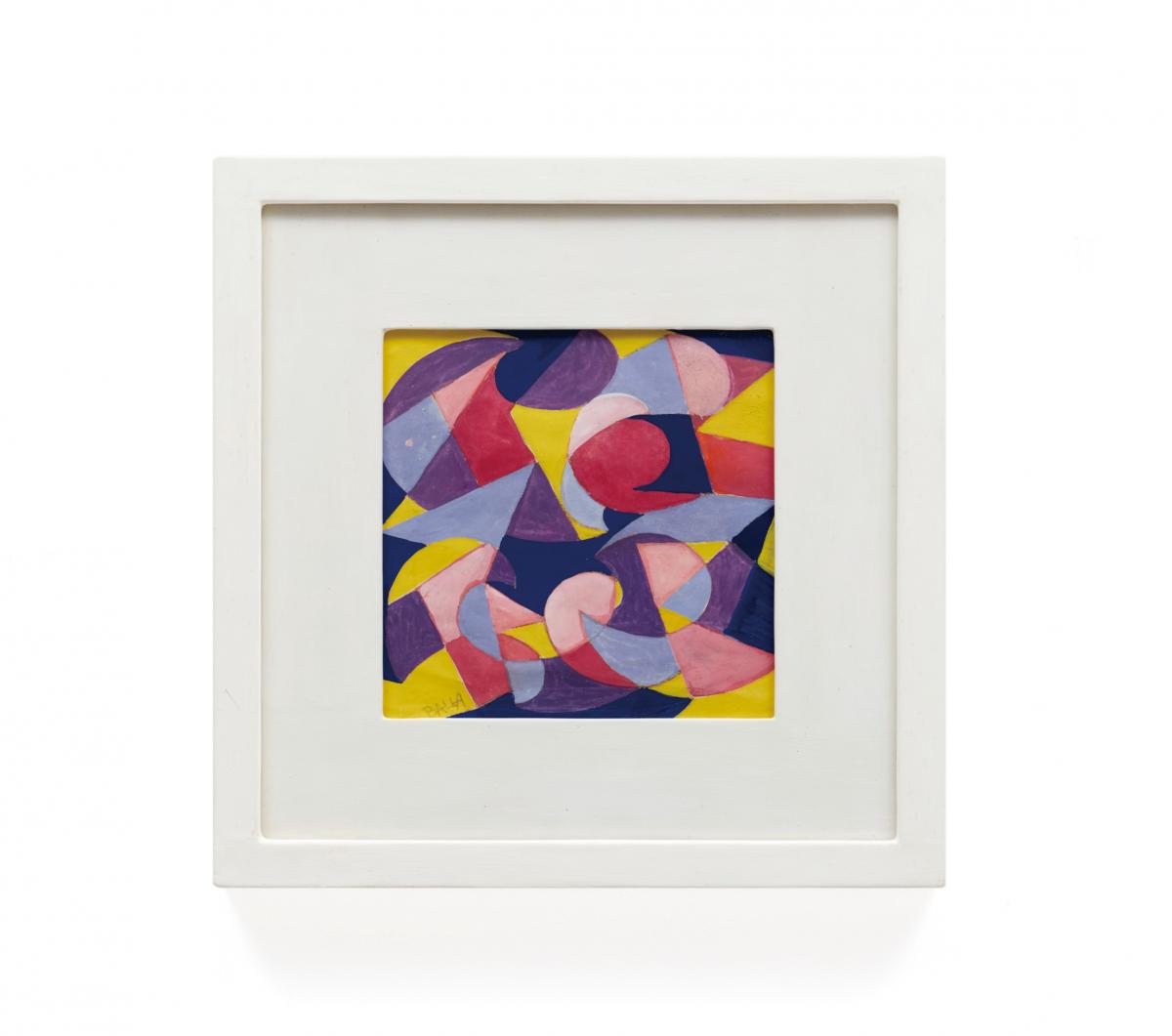
The work "Compenetrazioni sulla parola Tic Tac" is a small-format drawing created in 1921. During that same year, the Futurists opened a first Futurist dance club in Rome called "Bal Tic Tac", aiming to embed their philosophy into the fabric of daily life. Balla was responsible for the interior design and decoration of the venue, and this work was created the same year as a derivative of that project. Grounded in the concept of Parole in libertà (Words in Freedom) proclaimed by Futurism's founder Filippo Tommaso Marinetti, the piece visually liberates conventional language from their existing structures through the interpenetration of color and form. The onomatopoeia of "tick tock," evoking the passage of time, seems to embody the vitality and energy of Futurism in this period; through Balla's expression, it is reimagined within a cheerful, rhythmic dynamism all his own. The work came to Japan in 1973 on the occasion of a solo exhibition of Balla's work at the Tokyo Gallery, held after his death, and stands as a precious piece that illuminates his significant place within the Futurist movement.
- PROVENANCE
-
TOKYO Gallery + BTAP, Tokyo
- LITERATURE
-
“GIACOMO BALLA 1973.2.12-2.24”, TOKYO GALLERY 1973, no. B-6
- EXHIBITED
-
"GIACOMO BALLA 1973.2.12-2.24" , February 12-24, 1973, TOKYO GALLERY, Tokyo